SF has cycled back to the “Star Wars” era. Again.

space battleScience fiction, like many other things, enjoys cycles.  In SF’s case, those cycles usually involve the relative popularity of science itself: Exploring physics and extrapolating on reality, to discover or speculate more about ourselves and the universe we live in.  When the science part of SF is up, we get novels by scientist-authors like Arthur C. Clarke and Isaac Asimov; we get movies like 2001: A Space Obyssey, The Andromeda Strain and Soylent Green; we get TV series like Star Trek.

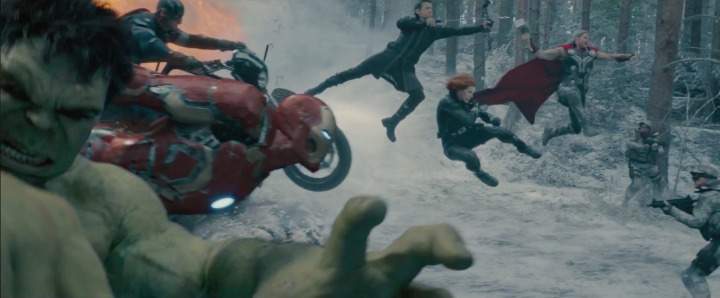
When science is down, we get space battles.  We see an abandonment of concepts like science and physics, in exchange for showy action and eye-candy.  We get movies like Star Wars and TV shows like Battlestar Galactica, and we see video games that are devoted to first-person shooters.  More cerebral content, like the movie Solaris or the TV series Caprica, quickly get dumped in favor of The Fifth Element, Aliens or Warehouse 13.

We even see science-embracing shows, like Star Trek, rebooted as science-ignorant shows. Read more…

Excerpt from Verdant Pioneers

cover for Verdant Pioneers, second book in the drama series by Steven Lyle Jordan In Verdant Pioneers, second in the Verdant series, the residents of the city-satellite Verdant—recently escaped from the environmental disaster caused by the eruption of the Yellowstone Caldera on Earth—are trying to make it on their own in deep space, seeking sources for supplies, and possibly even a habitable planet to resettle on if Earth proves unwilling or unable to allow them to return.

In this excerpt, geologist Brooke Adams hurries to return to the freighter Makalu, on a prospecting mission near the Gliese system, with a find that she knows will astound her colleagues… and the world.


“Brooke, I need a sitrep.”  Roy Grand paused over the com in the main bay, just forward of the shuttle bays.  Most of the rest of the crew, including Bob and Arnold, but not including Val and Nick, were crowded around him, looking at each other nervously.  “I have you as twenty minutes from hitting your emergency supply.  Where are you?”

I know,” came Brooke’s voice over the com, “and I’m coming as fast as I can!  But this rock is very brittle, and I absolutely don’t want to break it!  My ETA—” there was a significant pause at her end, before she finished, “—is close.

Arnold tapped Roy on the shoulder.  “I’ll suit up, in case she needs help.”  With that, he pushed off for the shuttle bays.

Bob also floated nearby, saying to no one in particular, “Why can’t she tell us what she found?  If it’s so important that she couldn’t take a break, and we couldn’t go back out after our break—I mean, if it’s hazardous or something, why’s she bringing it in?”

“Hey,” Roy said, “You’ve been right here, just like me.  I don’t know any more about it than you do.”  He seemed to consider the question, though, and spoke into the com: “Brooke, can you confirm that whatever you’ve got isn’t hazardous?”

It’s not hazardous,” Brooke responded instantly.  “But, I repeat, you do not want me to break this!

Read more…

Making novels feel real

Steven Lyle JordanI recently heard from a reader who wanted me to know how much he’d enjoyed how my stories had drawn him into the narrative.  He specified Verdant Pioneers, and described a scene where one of the female characters is reunited with a beau that appeared in Verdant Skies He described the moment with a series of words from the book, which I immediately recognized, and then lamented that not only did he strongly feel that moment, but he felt bad that he’d never felt such a powerful emotion directed at himself!

(Yeah, join the club.  We have T-shirts.)

I’m not writing about this to brag, but to point out the difference between different writing styles, and how they affect readers. Read more…

Doc Savage: The mold from which heroes were and are made

Doc SavageIt was recently announced that Iron Man 3 director Shane Black is in discussion to helm a new movie for Sony, starring the pulp hero Doc Savage.  A friend of mine saw this, and correctly guessed that I would squee upon hearing the news.

Why? I grew up reading the famous “181 Supersagas” of Doc Savage—also known as the Man of Bronze—and his friends Monk Mayfair, Ham Brooks, Renny Renwick, Johnny Littlejohn and Long Tom Roberts, occasionally joined by Doc’s cousin Pat Savage, as they raced around the world, investigating scientific mysteries, righting wrongs, and punishing evil-doers wherever they were found.  Doc and his friends were among the very first “science heroes,” those who embraced the modern world of steel and wonder, and who used science and intellect to solve mysteries and save the day… but with plenty of very unscientific fisticuffs and derring-do thrown in for excitement.  Doc Savage, the leader of the group, was no less than the template that future superheroes would be based upon for the balance of the 20th century. Read more…

Encouragement and Zen

Steven Lyle JordanI recently heard from a producer with whom I’m collaborating on a possible television vehicle, who told me he’d heard from an actress who had been a major character in the original production that inspired this new vehicle—and yes, that’s all you’re getting from me, as the project is still in stealth mode.

Anyway, this actress—I’ll call her M—had a chance to read through the material we’re preparing for the new vehicle, including two short stories of mine, and she reported back to my producer friend that she was left “in tears” over the wonderful treatments and ideas gleaned from the original production, of which she still has very fond memories.  M specifically mentioned my short stories as being among the most moving material she saw. Read more…

Cowboy BeBop: We need more sci-fi like this

Cowboy BeBopWhat do an ex-cop with an artificial arm, an ex-hitman with a mean martial-arts gift, an amnesiac con artist with a gambling problem, a slightly wacko hacker and an artificially-intelligence-enhanced dog have in common?  These characters—Jet Black, Spike Spiegel, Faye Valentine, “Radical” Edward and Einstein the Welsh Corgi—all fly together on a ship called the BeBop, traveling about the occupied areas of the Solar System chasing down bounties in order to pay for their next meal.

On the surface, Cowboy BeBop looks like most sci-fi anime, with stylized characters, futuristic tech, spaceships and settlements on other planets; but not, as those settlements tend to look like third world countries, the ships look very used and ugly, billboards hang in space and the heroes are as likely to fight their bounties with fists as with guns.  And for a program about futuristic bounty hunters, an awful lot of strange and funny things that have nothing to do with bounties tend to happen to them… they’re not the most successful at their trade, and they eat a lot of cheap noodles for sustenance.  In other words, the crew of the BeBop seem a lot like normal people.

And maybe science fiction needs more people like them. Read more…

What do readers owe authors?

Steven Lyle JordanMy recent efforts to figure out the future of my perennially zombie-fied writing sideline has naturally led to a lot of questions for myself, trying to justify my actions as an author, a promoter and an entrepreneur.  Front and center to these questions has been the role of social media to promote and sell my products, and attempts to better understand what works and why.

In my searches to better understand, I came across an old TeleRead article by Joanna Cabot, entitled “What do readers owe authors?“  The article investigates the idea that readers are encouraged by authors to help promote them, largely by utilizing the social media tools at their disposal—blogs, review columns, Facebook, Twitter, email, etc—and that doing so helps the authors to continue to produce for them. Read more…

Follow

Get every new post delivered to your Inbox.

Join 59 other followers

%d bloggers like this: